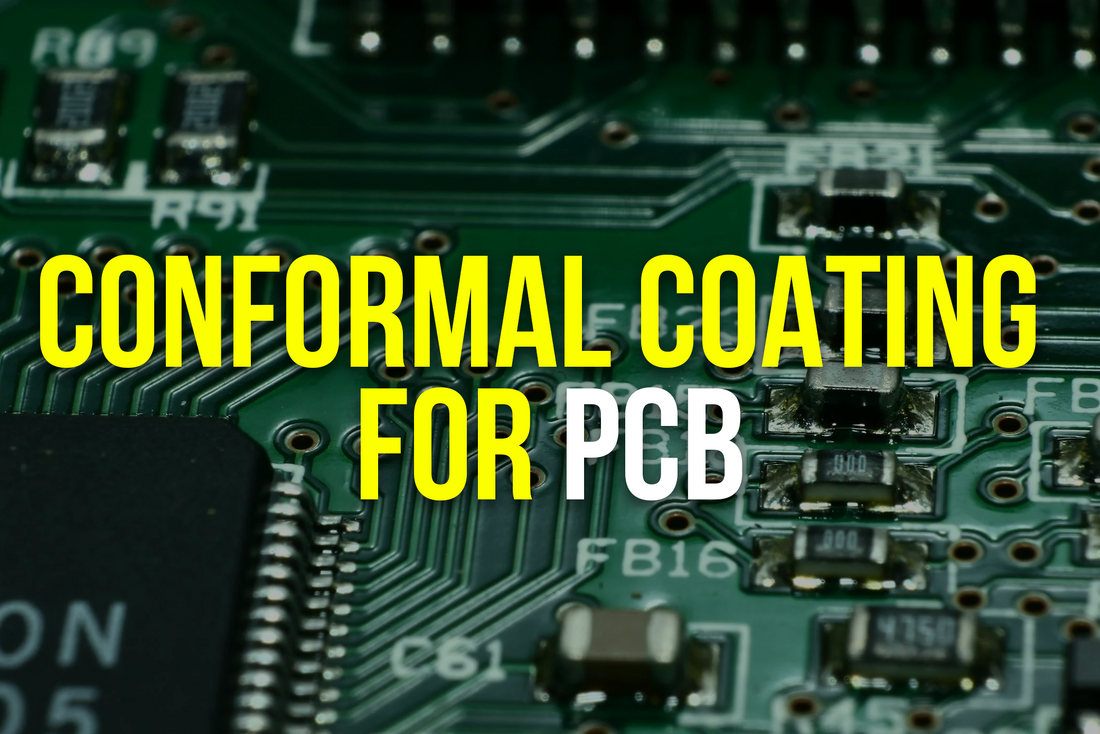
Conformal coating is a thin protective film — usually 25 to 250 microns thick — applied over a printed circuit board (PCB) to shield it from moisture, dust, chemicals, salt and temperature swings. Unlike encapsulation, it follows the contours of the board and its components, protecting the assembly while keeping it light and serviceable.
What conformal coating does for a PCB
- Environmental protection — blocks moisture, dust and contaminants that cause corrosion and shorts.
- Chemical resistance — withstands solvents, acids and salts in harsh environments.
- Electrical insulation — reduces the risk of shorts and dielectric breakdown.
- Thermal & UV resilience — protects solder joints and components from heat and UV ageing.
How conformal coating is applied
Four common methods: spraying (aerosol or automated — fast and even), dipping (full immersion for complete coverage), brushing (precise, for rework or small areas), and selective coating (automated, coats only defined zones).
Standards that matter
For mission-critical electronics, the coating should meet IPC-CC-830C (the primary qualification standard) and, for defence and aerospace, MIL-I-46058C. Micron’s Protektor® acrylic coatings conform to both, and are C-DOT approved and RoHS compliant.
Where conformal coating is used
Automotive electronics, aviation and space, marine, medical equipment, defence communication systems and household electronics — anywhere reliability in harsh or variable conditions matters.
The Protektor® range from Micron Aerosols
Protektor® is Micron’s PCB conformal-coating line — IPC-CC-830C and MIL-I-46058C grade, C-DOT approved, RoHS compliant, and available with a UV tracer for coverage inspection:
- 3100 Protektor® Conformal Coating (military grade) →
- 3110 Protektor® Conformal Coating — with UV tracer →
- 3307 Protektor® Acrylic Sealant →
- 3308 Protektor® Conformal Coating Remover & Thinner →
Explore all electronics-protection products in the Micron Aerosols electronics collection.
Related reading: Acrylic vs silicone conformal coating and Conformal coating standards in PCB manufacturing.
Frequently asked questions
What is conformal coating on a PCB? A thin polymeric film (about 25–250 microns) applied over a circuit board to protect it from moisture, dust, chemicals and temperature changes while following the board’s contours.
How thick should conformal coating be? Typically 25–75 microns for acrylic spray coatings, applied evenly — too thin under-protects, too thick can crack under thermal cycling.
What standards should PCB conformal coating meet? IPC-CC-830C is the primary standard; MIL-I-46058C is the defence and aerospace benchmark. Protektor conforms to both and is C-DOT approved.
How is conformal coating applied? By spraying (aerosol or automated), dipping, brushing, or selective coating.
Can conformal coating be removed for rework? Yes — acrylic coatings are re-dissolvable with a compatible thinner or remover, which makes board rework straightforward.